¶ EXECUTIVE SUMMARY
HyperSERV is SteelDome’s unified hyperconverged infrastructure platform, combining the capabilities of StratiSTOR and StratiSERV into a single software-defined foundation for modern compute, storage, and application delivery. It is designed to support high-performance enterprise workloads, AI and machine learning environments, virtualized infrastructure, and data-intensive operations within one integrated architecture.
By bringing together scalable storage, enterprise virtualization, container-ready orchestration, and high-speed networking support, HyperSERV gives organizations a streamlined path to building infrastructure that is powerful, adaptable, and operationally consistent. It enables businesses to start with compact deployments, scale non-disruptively, and expand across sites or regions without being constrained by proprietary hardware models or rigid infrastructure silos.
Built as a hardware-agnostic platform, HyperSERV helps reduce total cost of ownership while preserving the performance, resiliency, and flexibility required for modern workloads. Whether deployed for private cloud, AI infrastructure, edge computing, mixed workload consolidation, or large-scale enterprise operations, HyperSERV provides a unified foundation designed to evolve with organizational needs.
¶ SERVICE ARCHITECTURE
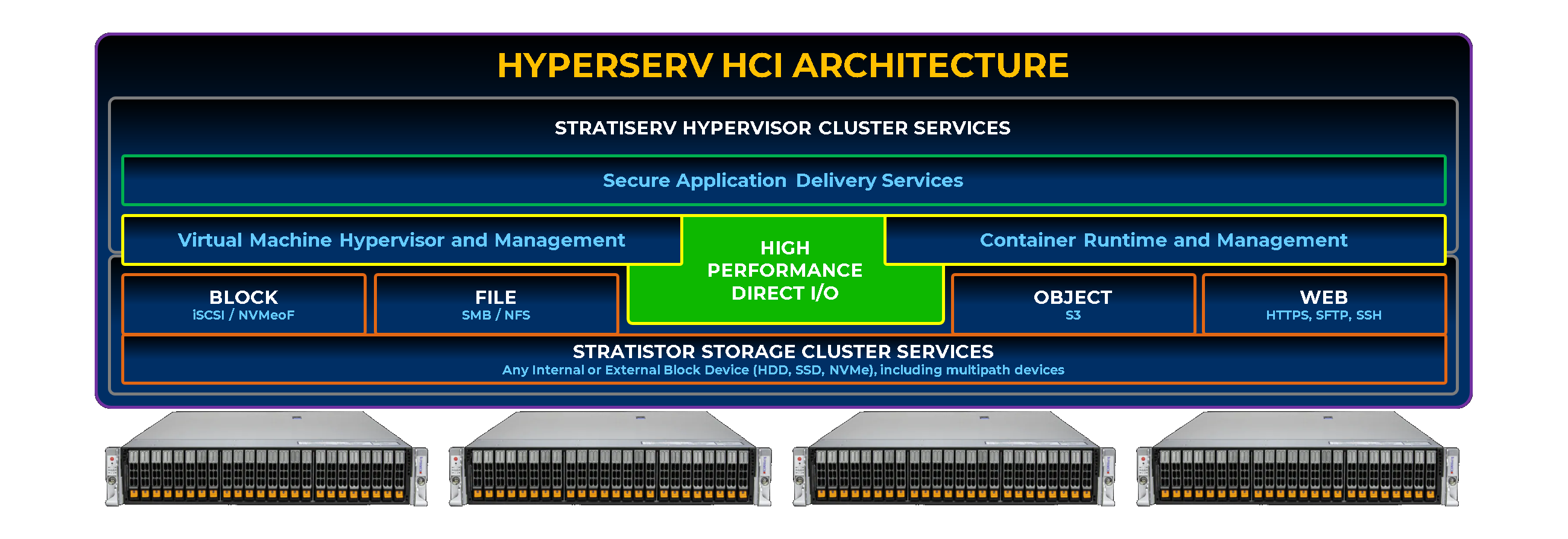
HyperSERV delivers the foundational services needed to support modern infrastructure across a wide range of performance, capacity, and availability requirements. It combines software-defined storage, virtualization, container-ready orchestration, and integrated networking into a single operational model that simplifies deployment and ongoing management.
By unifying compute and storage services under one platform, HyperSERV reduces architectural fragmentation and gives organizations a consistent way to deploy and manage workloads across core data centers, edge locations, and distributed environments. It is designed to support block, file, and object access alongside virtual machine and application delivery services, creating a flexible platform for both traditional and modern workloads.
¶ INDUSTRY CHALLENGES AND TRENDS
In the rapidly evolving digital landscape, organizations face several critical challenges as they strive to stay competitive and modern:
 |
Explosive Data Growth – Data volumes continue to expand across AI pipelines, analytics platforms, media repositories, enterprise applications, backups, and real-time systems. Infrastructure must be able to scale without forcing disruptive redesigns or excessive capital investment. HyperSERV is built to support this growth with a scale-out architecture that expands capacity and performance together. |
 |
Demand for High-Performance Infrastructure – Modern applications require fast access to data, low latency, and predictable performance under concurrency. From virtualization and databases to AI and HPC workloads, organizations need infrastructure that can sustain demanding throughput and parallelism without becoming an operational bottleneck. HyperSERV is designed for these performance-sensitive environments. |
 |
Hybrid and Distributed Operations – Infrastructure now spans centralized data centers, edge sites, and distributed regional environments. Organizations need a platform that can maintain policy consistency, workload mobility, and operational simplicity across all of them. HyperSERV supports this with deployment flexibility that aligns to tiered, hyperconverged, and hybrid architectures. |
 |
Cost Efficiency and Operational Simplicity – Legacy infrastructure often comes with high licensing costs, hardware lock-in, and complex lifecycle management. HyperSERV replaces that model with a software-defined approach that runs on standard hardware, lowers infrastructure overhead, and simplifies long-term scaling and modernization. |
 |
AI-Ready Infrastructure – Organizations increasingly need infrastructure capable of supporting AI training, inference, large-scale data movement, and accelerated workloads. HyperSERV is positioned for these requirements through high-speed networking support, optimized data proximity, scalable architecture, and integration with modern compute and storage services. |
¶ ADVANCED FEATURES FOR PERFORMANCE, SCALABILITY, AND OPERATIONAL READINESS
HyperSERV is engineered to support demanding enterprise and data-intensive environments through a combination of distributed architecture, advanced data services, optimized I/O handling, and resilient operational design.
 |
Distributed, Scale-Out Architecture – HyperSERV is built to eliminate single points of failure and enable non-disruptive growth. Its distributed design allows organizations to scale from compact environments to large multi-node deployments while maintaining availability, performance, and operational consistency. |
 |
Next-Generation I/O Acceleration and Concurrency Handling – Designed for demanding workloads, HyperSERV supports optimized I/O paths and high-concurrency operations to improve throughput and reduce latency. This makes it well suited for virtualization, analytics, AI, machine learning, and other performance-intensive environments. |
 |
Unified Multi-Protocol Infrastructure – HyperSERV provides access to storage services across multiple protocols, including block, file, and object models, while also supporting virtualized and containerized compute operations. This unified approach reduces infrastructure sprawl and allows diverse workloads to run on a single platform. |
 |
High-Speed Networking Integration – HyperSERV is designed to work with modern high-performance networking technologies, including environments that require advanced data movement and low-latency communication. This strengthens its role in AI, GPU-accelerated, and other high-throughput infrastructure deployments. |
 |
Advanced Data Protection and Integrity – With support for replication, erasure coding, integrity mechanisms, and automated recovery behavior, HyperSERV is designed to help protect data and maintain service continuity during component, node, or broader infrastructure failures. |
 |
Self-Healing and Continuous Availability – HyperSERV is designed for operational resilience. Its architecture supports automated fault response and recovery behavior that helps reduce manual intervention and maintain service continuity in environments where uptime and consistency are critical. |
¶ COMMON HYPERSERV DEPLOYMENT USE CASES
Good software offers features and flexibility; great software adapts to any scale. With HyperSERV, start small with a single node and grow seamlessly into multi-node clusters or federated super-clusters spanning regional data centers.
 |
Single Node – Ideal for edge locations, remote office and branch office environments, development use cases, and compact infrastructure footprints. A single-node HyperSERV deployment provides a streamlined entry point into hyperconverged infrastructure while preserving a consistent operational model. |
 |
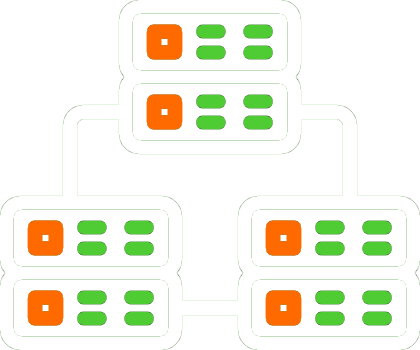
Multi-node Clusters – Well suited for production environments that require high availability, performance, and flexible workload support. Multi-node HyperSERV clusters can support virtualization, application delivery, storage services, and data-intensive operations while scaling incrementally as demand increases. |
 |
Large-Scale Enterprise Clusters – Designed for organizations that need substantial performance, concurrency, and resilience across large infrastructure estates. These deployments are well suited for enterprise data centers, service providers, research platforms, AI environments, and other demanding operational models. |
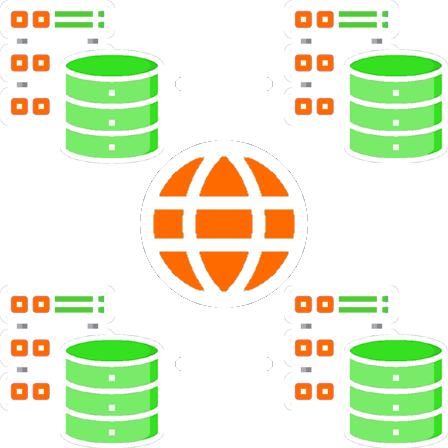 |
Federated Multi-Site Environments – HyperSERV can support distributed infrastructure across data centers, regions, and broader geographic footprints. These architectures are valuable for organizations that require data replication, cross-site continuity, resource distribution, and a more unified operational model across multiple locations. |
¶ DEPLOYMENT FLEXIBILITY
HyperSERV is built to support multiple architectural models so organizations can align infrastructure design with workload requirements, operational preferences, and long-term growth strategy.
|
TIERED 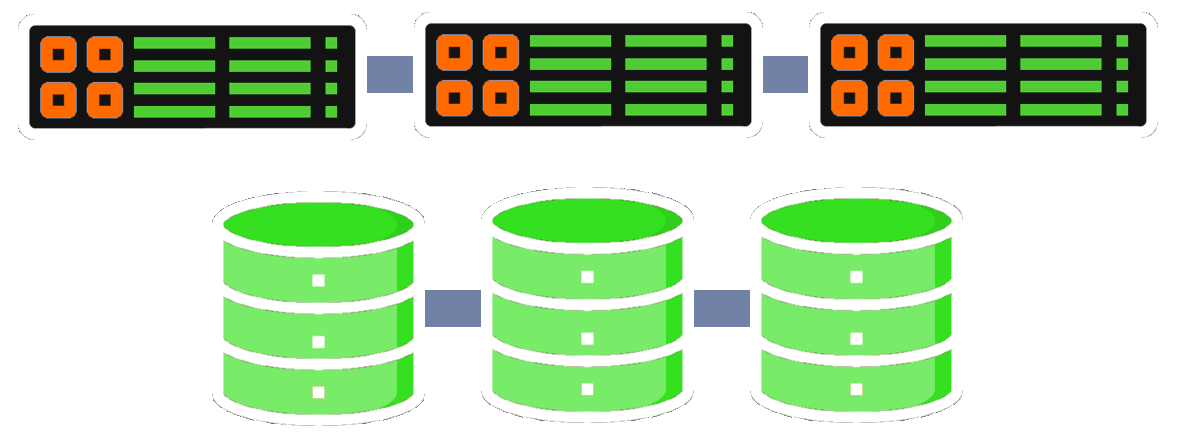 |
In a tiered deployment, compute, storage, and networking resources can be managed as distinct layers. This model is well suited for environments that require independent scaling, specialized resource allocation, or architectural separation between infrastructure domains. |
|
HYPER-CONVERGED 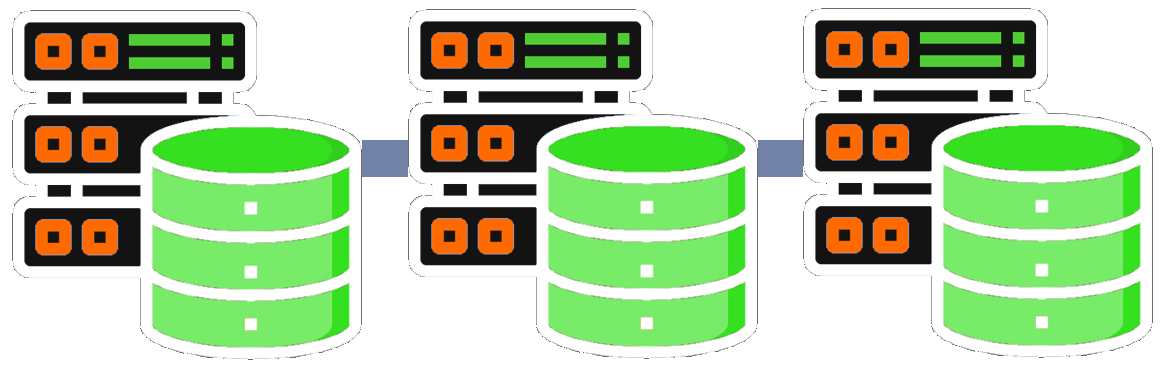 |
In a hyperconverged model, compute, storage, and networking services are combined into a single software-defined environment. This simplifies deployment, reduces operational overhead, and enables straightforward linear scaling by adding nodes that expand resources together. |
|
HYBRID 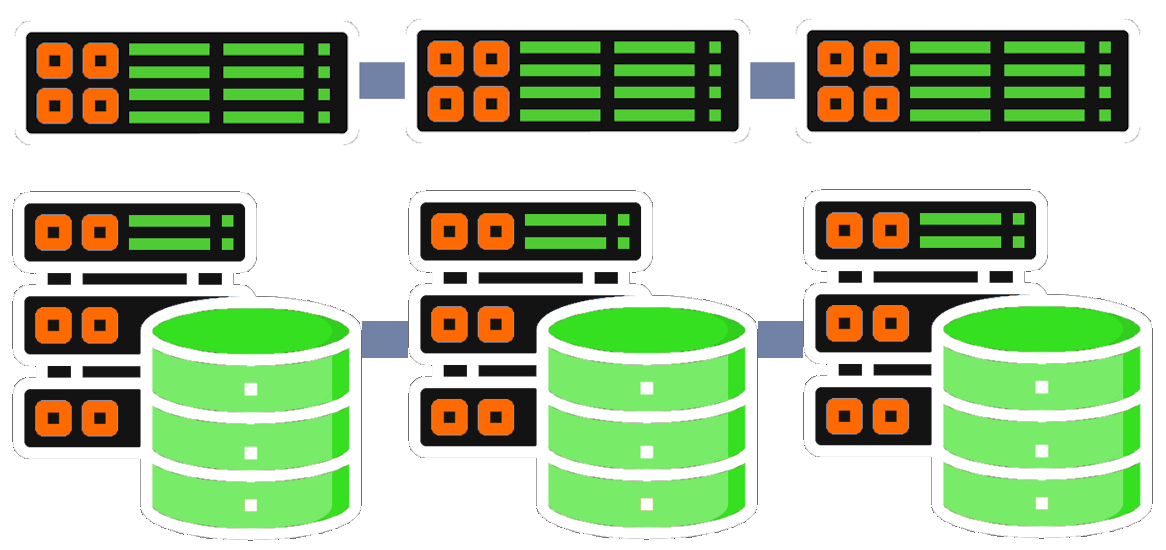 |
HyperSERV also supports hybrid deployment models that blend the flexibility of tiered systems with the simplicity of hyperconverged infrastructure. This allows organizations to scale infrastructure independently or in a unified manner, depending on workload demands and operational priorities. |
¶ CONCLUSION
HyperSERV is a modern infrastructure platform built for organizations that need compute, storage, and application services to operate as a unified whole rather than as disconnected systems. By combining the strengths of StratiSTOR and StratiSERV into one software-defined architecture, HyperSERV helps reduce complexity, improve scalability, and provide a stronger operational foundation for current and future workloads.
Whether the goal is to modernize private cloud, support AI and accelerated computing, deploy resilient hyperconverged infrastructure, extend services to the edge, or build large-scale distributed environments, HyperSERV provides the flexibility, performance, and simplicity to move forward with confidence.